Rebuilding a legacy telecom dashboard into a modern system
ROle
UI Developer Intern @ Orchestra Technology
Timeline
June 2025 -
August 2025
Alnstein
the problem
When complexity outgrows the interface
Orchestra Technology is a tech startup focused on mobile performance assurance and enterprise mobility. Their core platform, AInstein, gives telecom professionals the tools to simulate user behavior, monitor KPIs, and make sense of massive datasets.
However, its AngularJS-based interface couldn’t keep up. Engineers struggled with slow performance, buried tools, and dense visualizations, adding friction to even routine tasks.
design goal
Make telecom data faster to navigate, easier to scan, and more adaptable without sacrificing technical depth.
1
Reduce unnecessary steps and navigation hurdles on the website
3
Migrate the legacy AngularJS framework to React for better performance and scalability
2
Modernize the visual design and make the data exploration seamless
Snapshot
Reframing the dashboard as a workspace
One of the biggest issues was how much the old interface relied on tabs. Some tabs were task-critical and used daily, while others were niche and rarely touched. Engineers spent too much time jumping between them just to cross-reference information.
I reimagined the dashboard as a customizable workspace:
High-priority data became default widgets
Less-critical tools could be added as widgets when needed, freeing up valuable screen space
Complex data still had dedicated pages, so the dashboard never felt overloaded

Dashboard
Engineers often need to answer one question quickly: Is the system healthy right now?
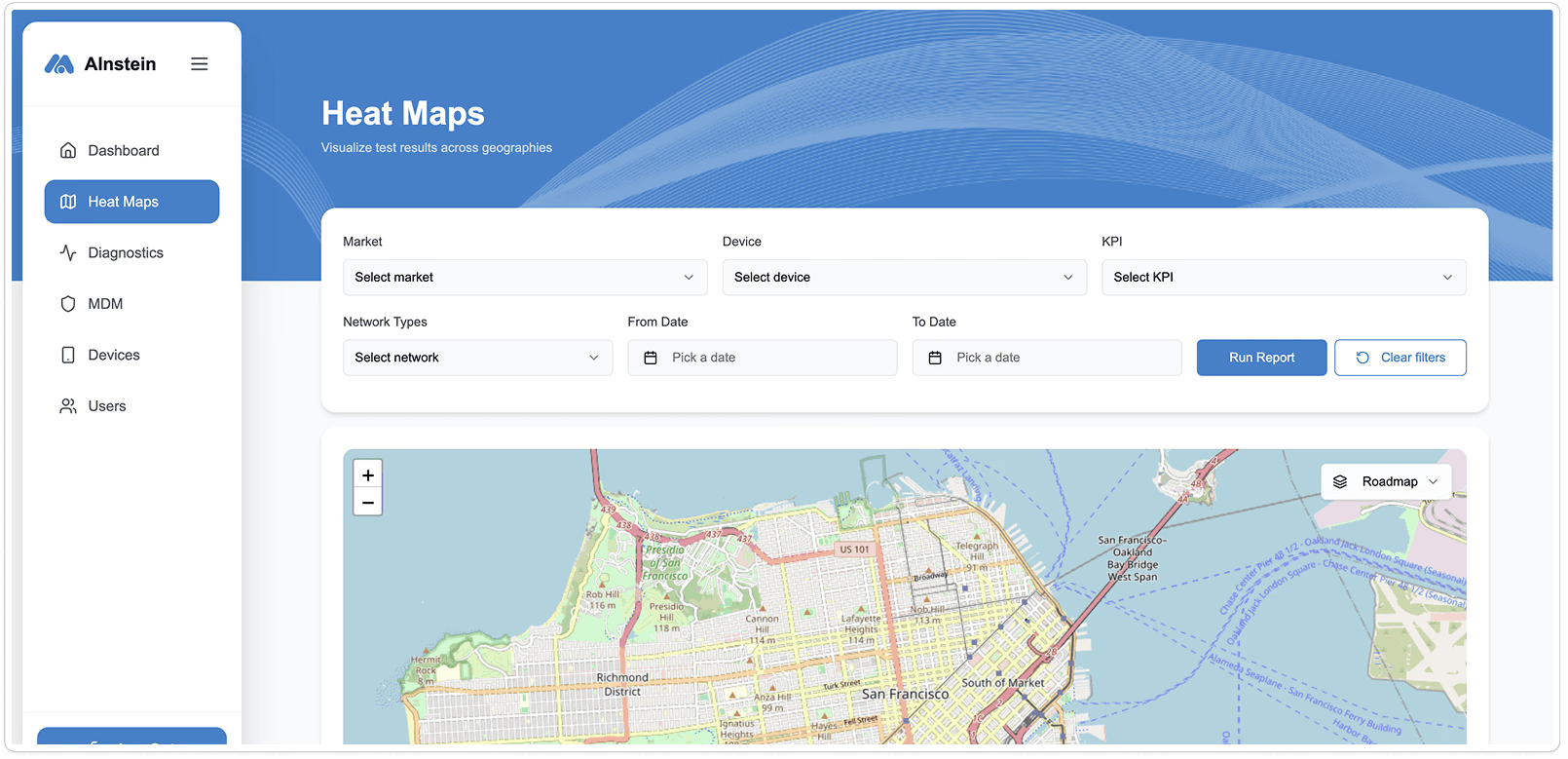
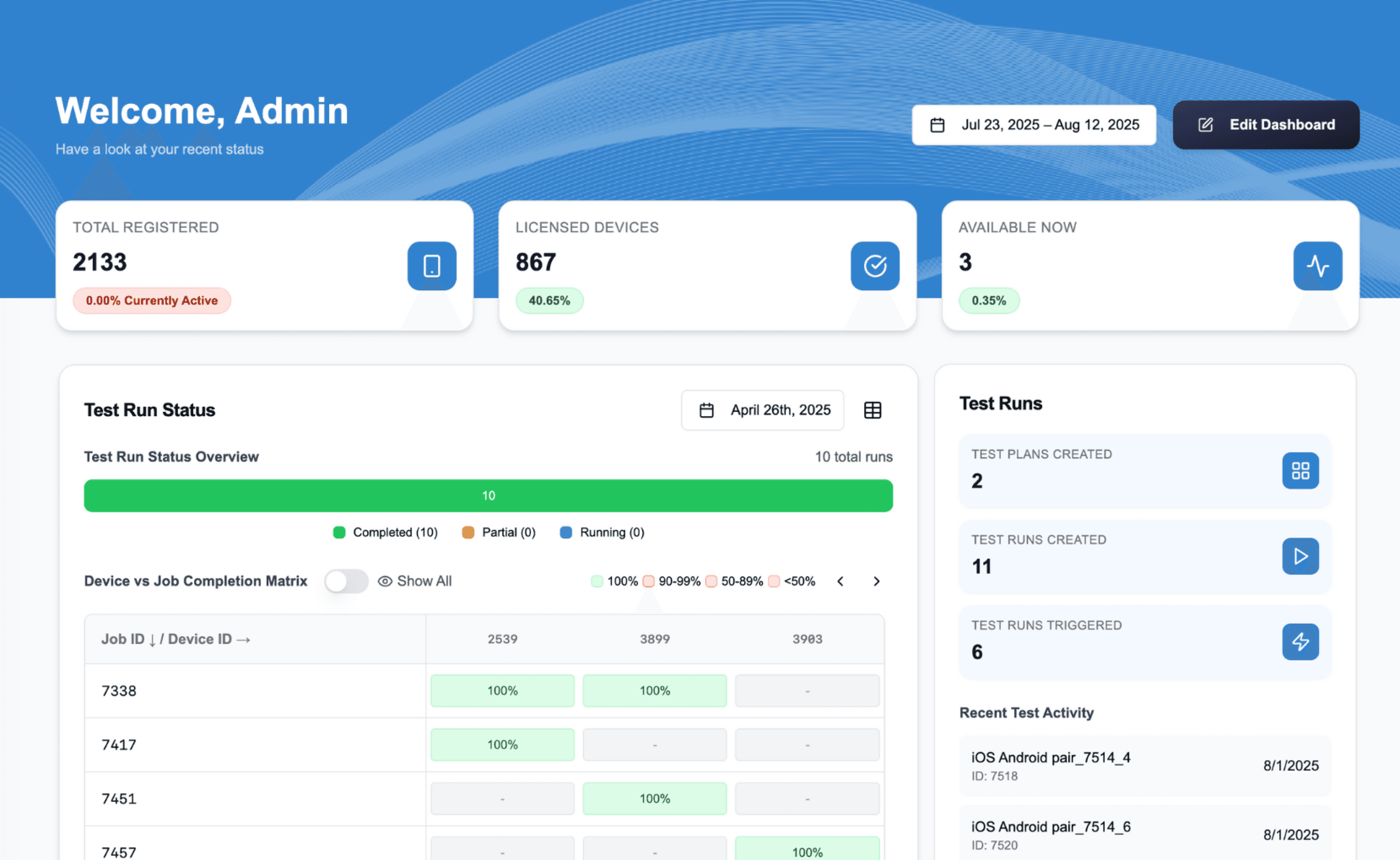
This dashboard was designed to provide that answer at a glance. Global date filtering keeps all widgets aligned, while status ratios and heatmaps summarize test runs into clear, scannable signals. By combining high-level visibility with drill-down modals, the dashboard supports both quick and deeper check-ins without forcing users to jump between tools.
Test Run Status
Large test datasets can easily hide problems in long tables. This view reimagines test run results as a visual matrix, where color and layout help engineers immediately spot incomplete, failing, or anomalous runs.
Swipeable views, pagination, and exception filtering reduce cognitive load by letting users focus only on what needs attention. The result is faster diagnosis and less time spent searching for issues that matter.
Mobile Device Management
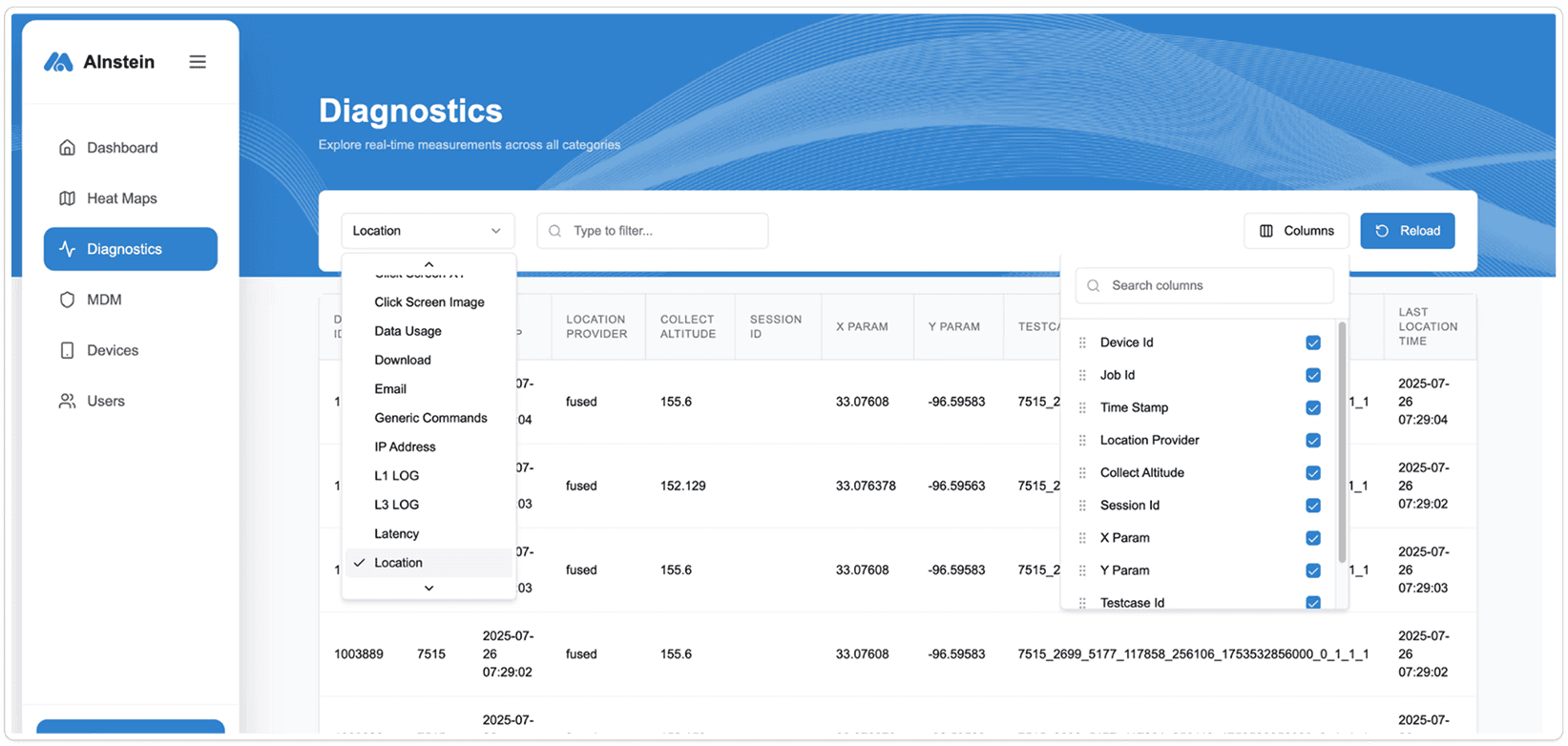
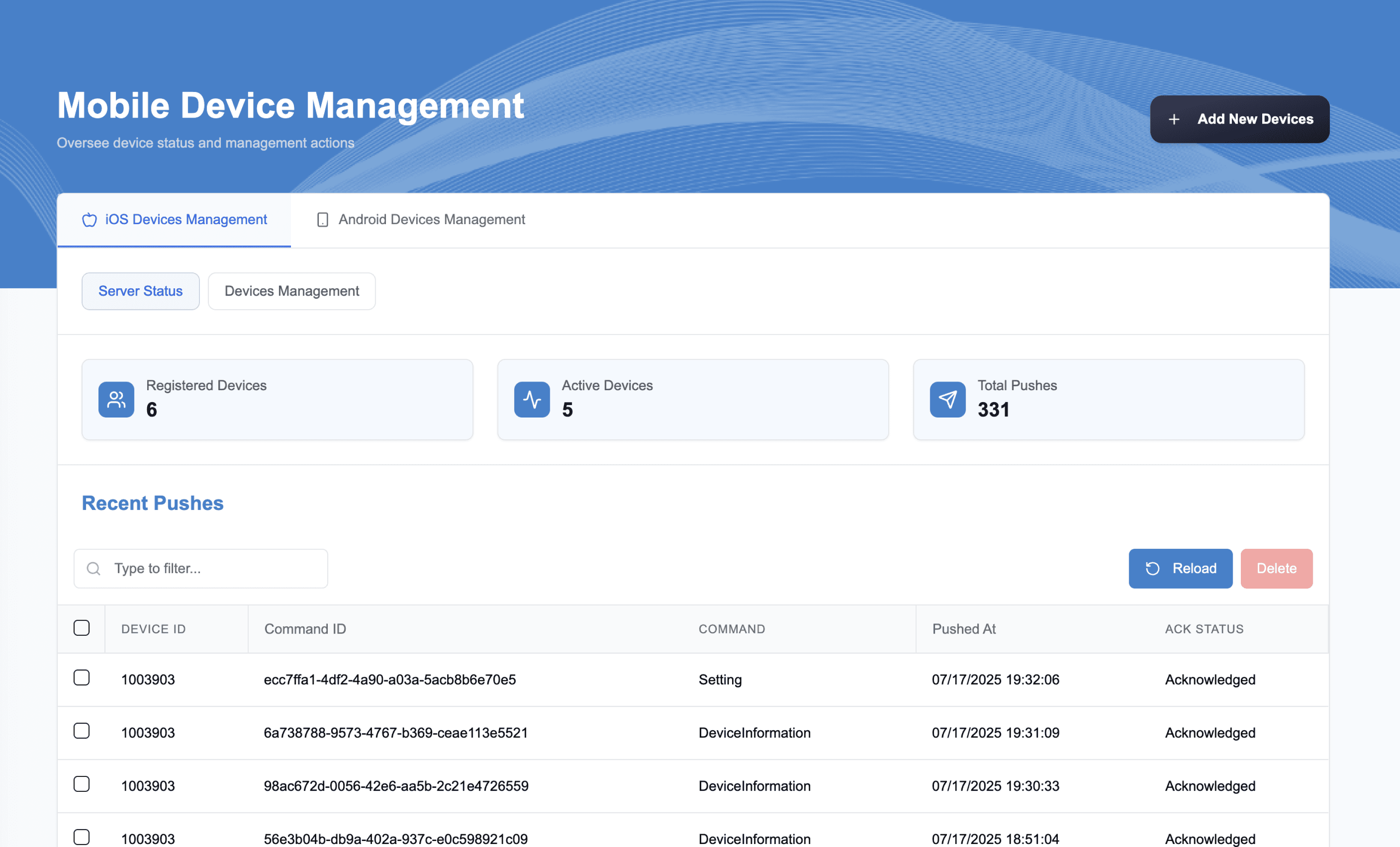
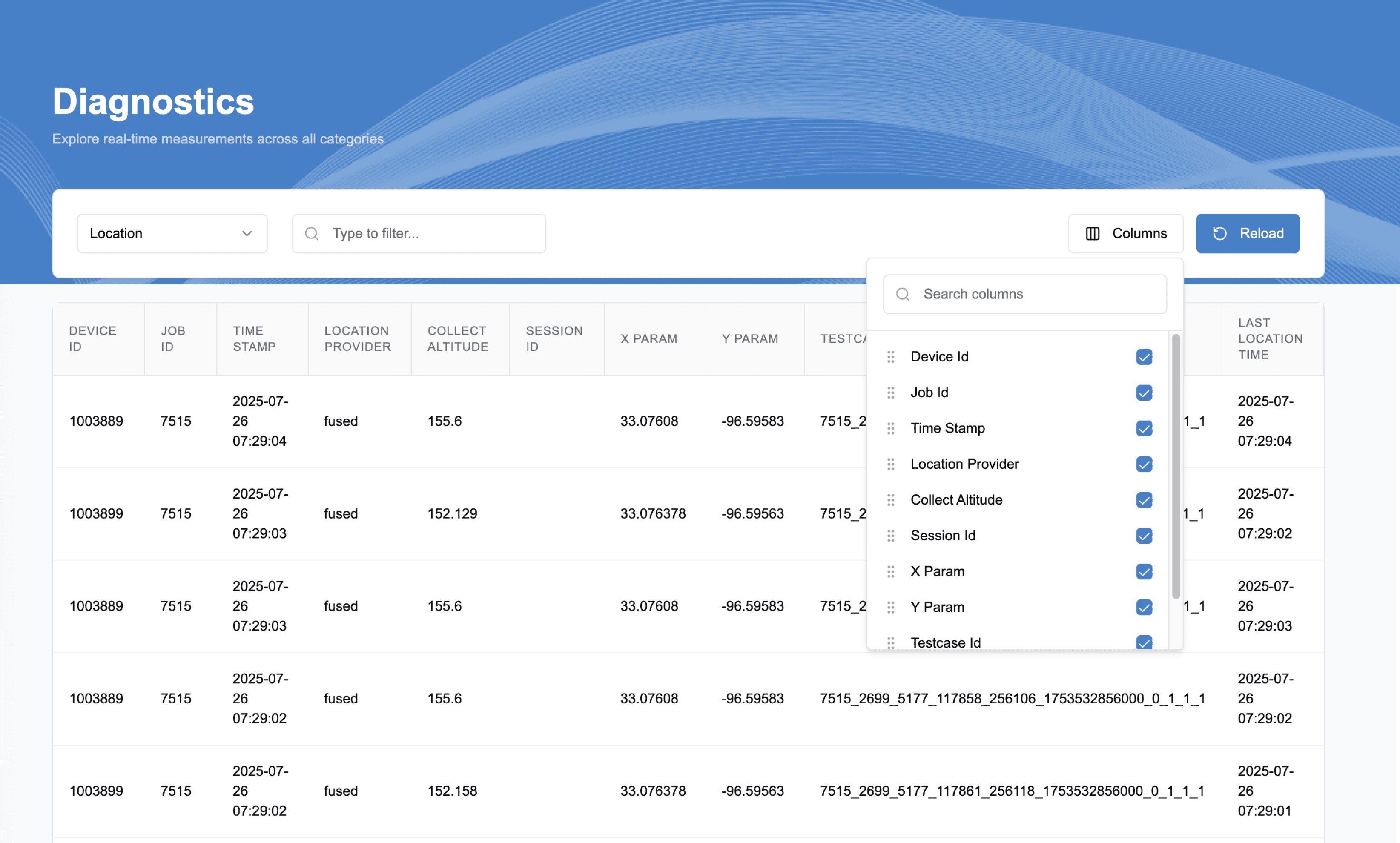
Managing thousands of devices requires structure without rigidity. This interface separates iOS and Android workflows at the top level, while nested tables and paginated actions keep dense data manageable. Users can customize column visibility to match their workflow, and low-signal data is visually de-emphasized to reduce noise.

Reflection
Development-wise, I:
Migrated AngularJS → React + Next.js
Built reusable components for cards, tables, and filters
Integrated 30+ REST endpoints with client-side performance optimizations
With the redesign, engineers mentioned that they could handle most of their key monitoring tasks right from the dashboard, reducing context-switching and making insights available at a glance.
Working on AInstein taught me that designing for specialists isn't about simplification but about clarity. In the telecom world, what looks like clutter to an outsider might be essential context for an engineer. My job wasn’t to strip that away but to make it easier to interpret and act on.
Even though AInstein is an internal tool, this project reinforced a core belief for me: technical users deserve the same level of thoughtful design as any customer-facing product. When you respect their expertise in your solutions, you don’t just make their work easier, but you help them do it better :)
thanks for reading!
resume