

Making walks engaging, healthy, and a reason to connect.
Personal Project
UX Design
UX Research


ROle
Sole UX Designer
Timeline
May 2024 - June 2024
tools
Figma/FigJam
initial problem discovery
When being active stopped feeling easy
Being active is supposed to feel simple, but somewhere between busy schedules and social coordination, it stopped for me.
Outside of structured spaces like teams or classes, planning something healthy with my friends often turns into negotiation, logistics, or compromise. The easiest option becomes doing nothing, not because people lack interest, but because effort outweighs momentum.
This gap between wanting to be active and actually doing it became the starting point for Wander.
literature review
People aren’t unmotivated, they’re overwhelmed
A 2022 Singaporean study showed that common barriers to physical activity in adults, like time constraints and fatigue, can be addressed through strategies such as social support and infrastructure awareness, increasing physical activity and reducing sedentary behavior.
Built-in Social Support
Guided Awareness
competitive analysis
Existing apps are fun, but they’re solo fun
Designed for Shared Play
Adaptable to Different Interests
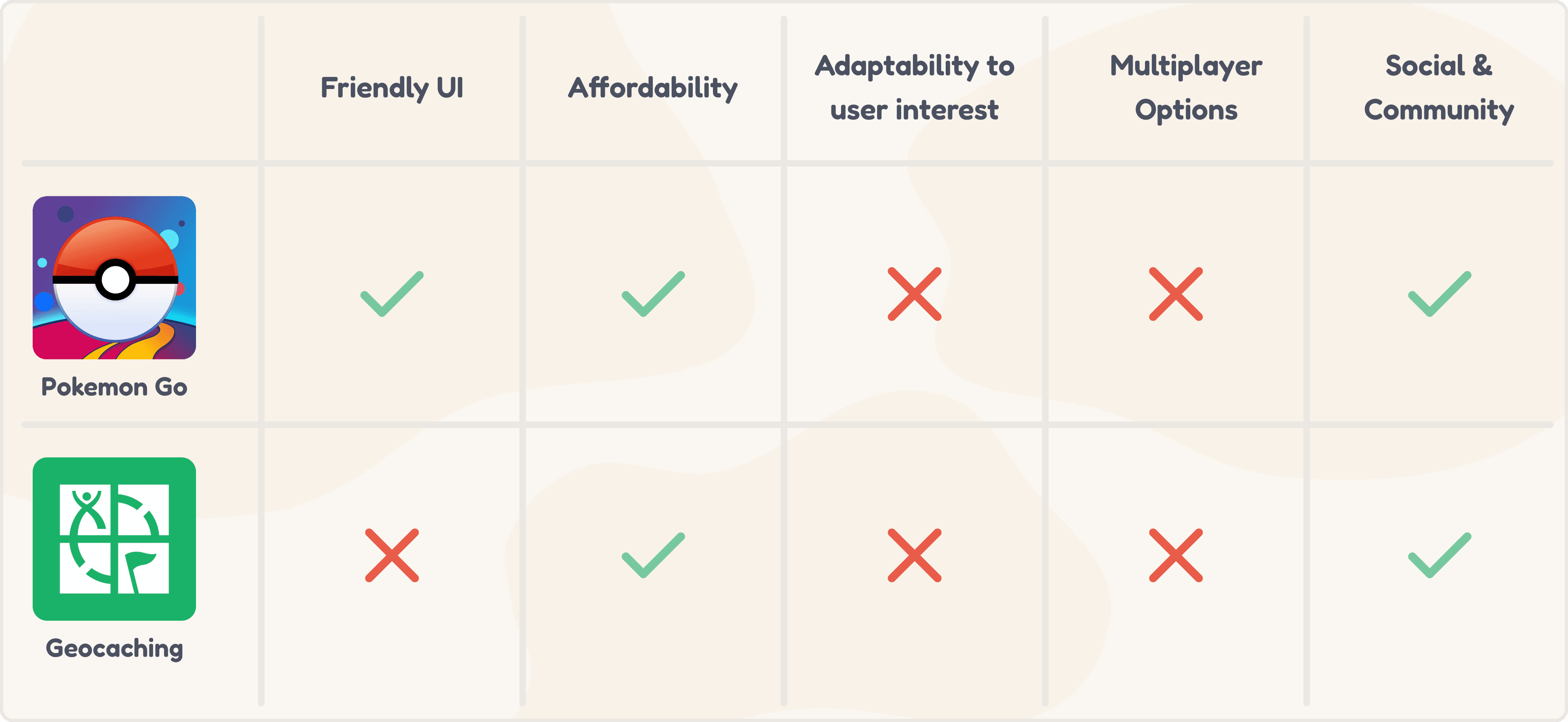
Looking at Pokémon Go and Geocaching, both are playful, friendly, and highly accessible, but they have limitations. Pokémon Go is fun but not adaptable to user interests and not truly collaborative. Geocaching is adventurous but lacks personalization and isn’t easy for quick plans.
So there was a gap: An experience that feels playful and adaptable and one that supports shared activity across ages, abilities, and physical distance.
surveys and interviews
People default to passive plans because they’re easiest to align around
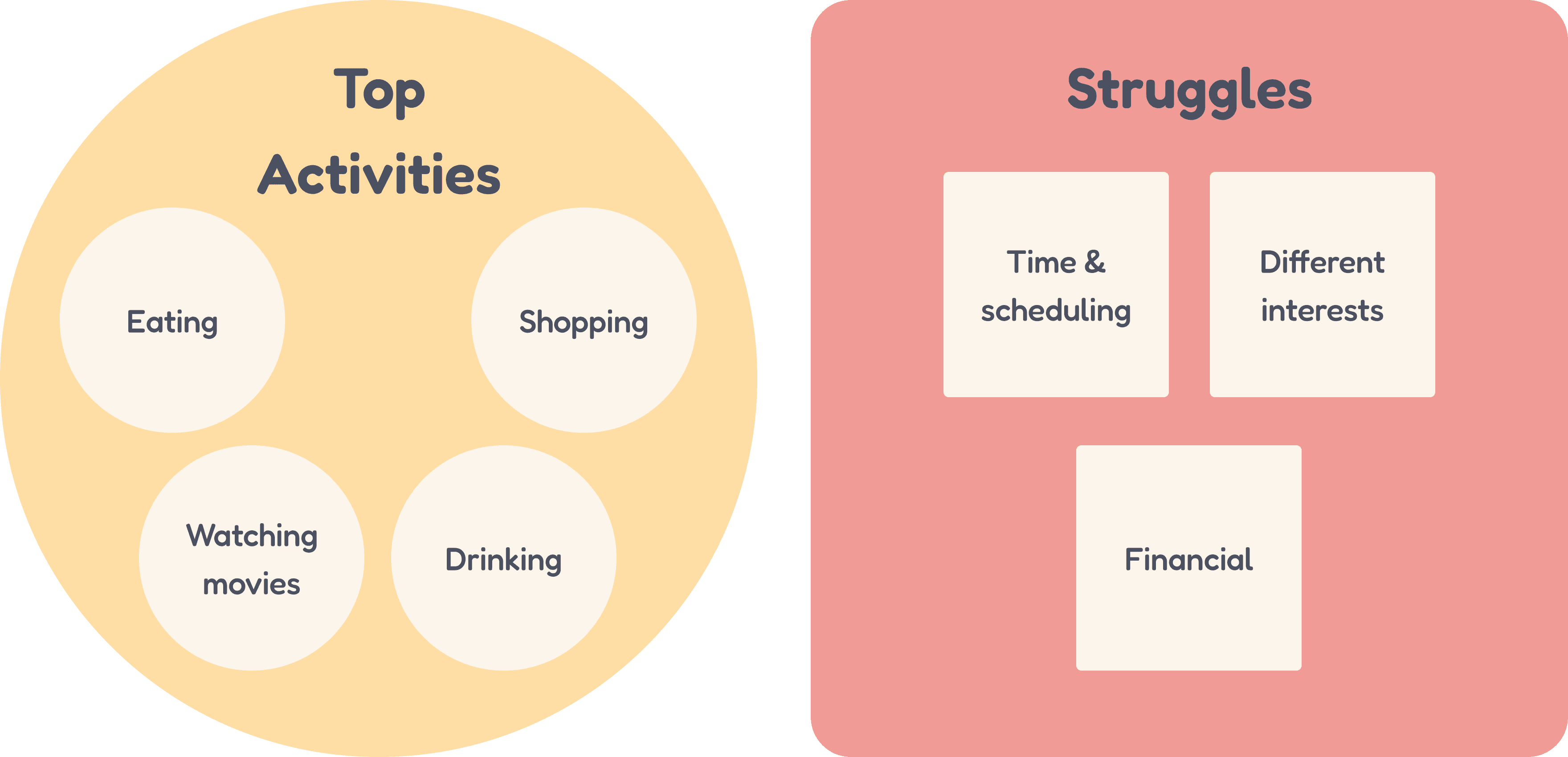
What are the activities family and friends are looking for? From the survey (30+ responses) and interviews (3 people), I affinity-mapped the insights into two areas. The takeaway was clear: if it wasn’t easy to start, it wouldn’t happen, so the solution had to be low effort, flexible, and forgiving of real-life constraints.
Effortless to Start
Inclusive of Different Constraints
the problem
People struggle to incorporate activities that are both enjoyable and healthy into their routines.
Before designing anything, I wanted to understand the bigger picture. I conducted a brief review of research on physical activity, motivation, and social behavior.
user personas
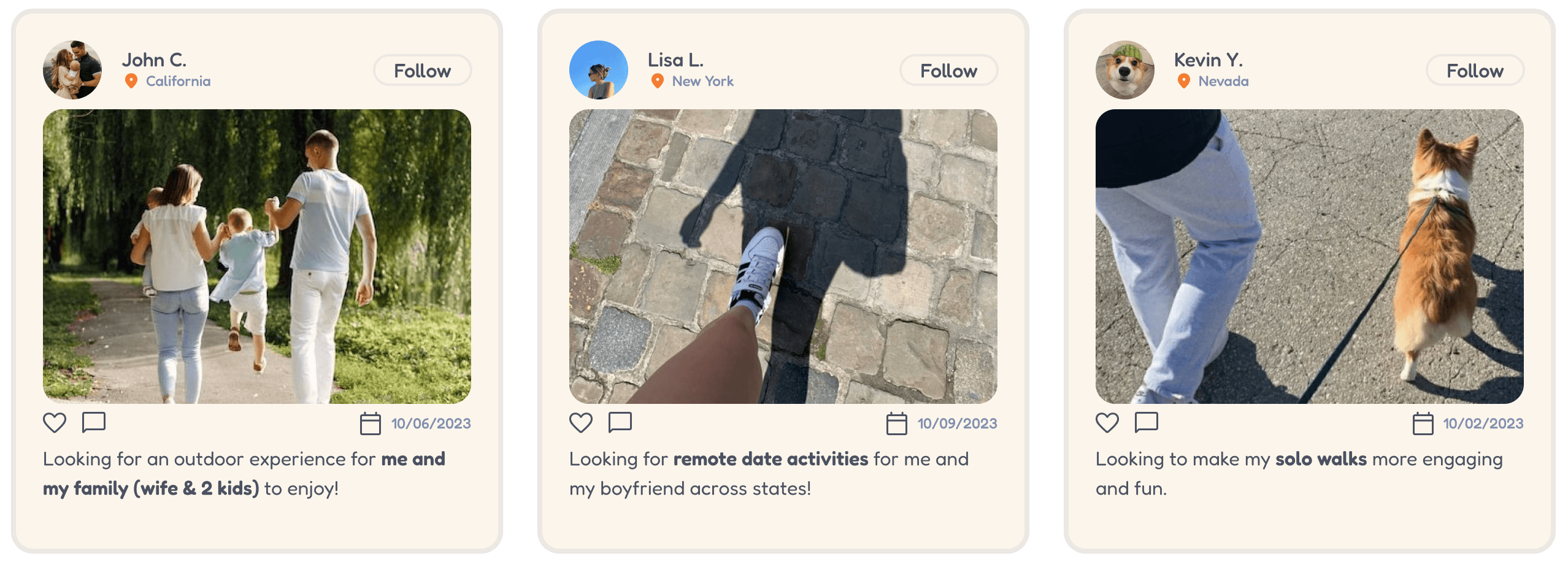
Different Walkers, Different Needs
how might we
Design a platform with physical and social benefits for individuals or groups?
concept direction
An app offering a unique social & physical adventure for individuals and groups.
This concept integrates features that bridge the gap between physical movement and social interaction. Key features are:
Augmented Reality
Integrate AR into challenges, creating unique and engaging scenarios that blend the digital and physical realms.
Tailored Challenges
Enjoy personalized challenges that align with individual interests and preferences.
Social Platform
Engage in conversations with friends, teammates, or fellow enthusiasts.
Virtual Collaboration
Enable users to participate in activities remotely, breaking down geographical barriers for a truly inclusive experience.
concept tradeoffs
Why Walking Works
After defining the concept direction, I explored several alternative formats early on for the medium of the app.

Walking
Worked best because it's low barrier, socially flexible, time-agnostic, and inclusive by default.

Running & Fitness
Challenges
Introduced higher intimidation and made it harder for people to participate together at different ability levels.
Indoor & Stationary
Play
Removed the physical and environmental connection that supported both health and engagement.
Destination-Based
Activities
Added planning, cost, and scheduling, which conflicted with the insight that people default to what’s easiest to align around.
information architecture
Sitemap
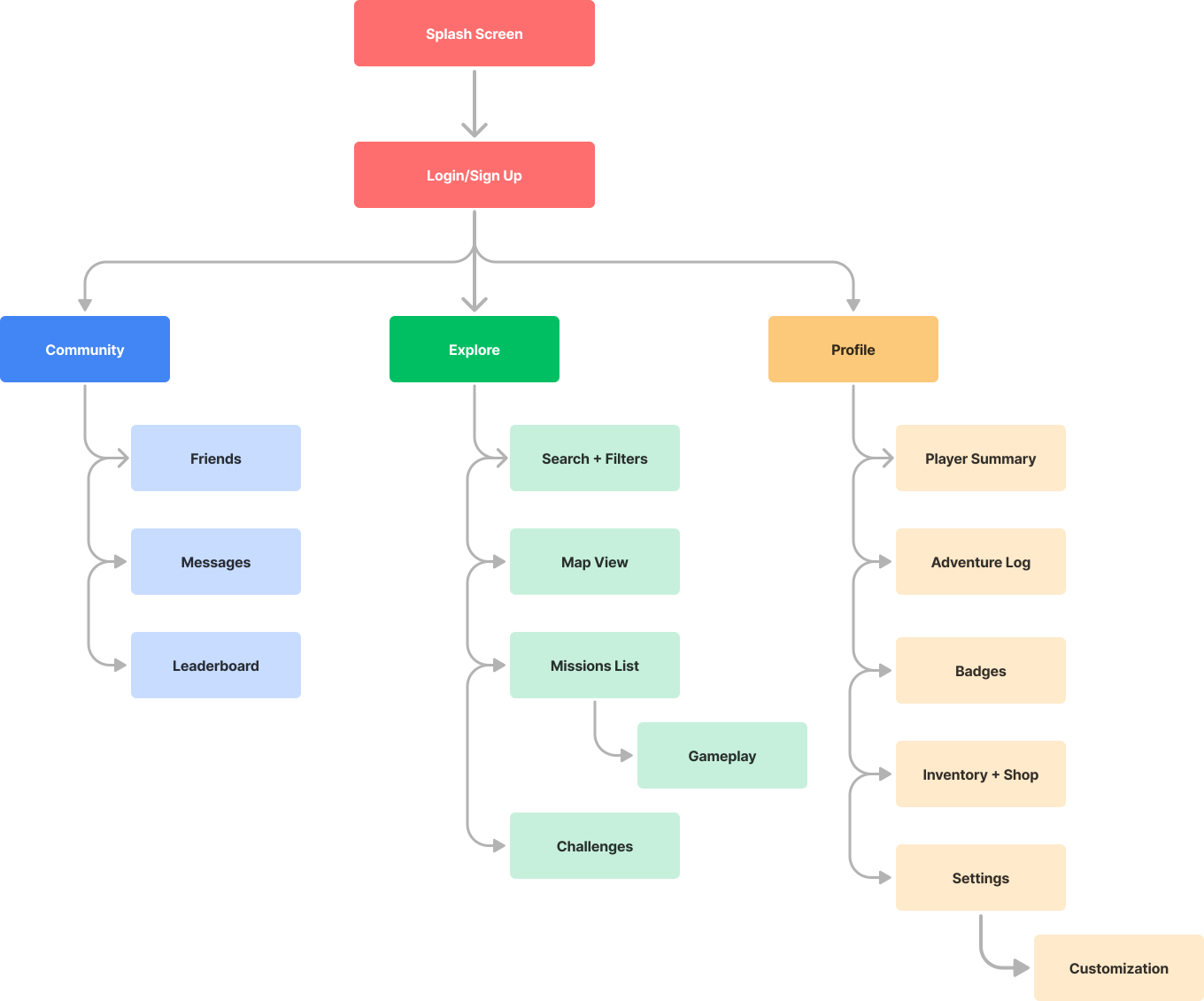
The goal was to avoid cognitive overload, especially outdoors, where users take quick glances at the screen. I created a clear and straightforward structure, making it easy for players of all ages to navigate, communicate, and do collaborative gameplay.
Lo-fi design
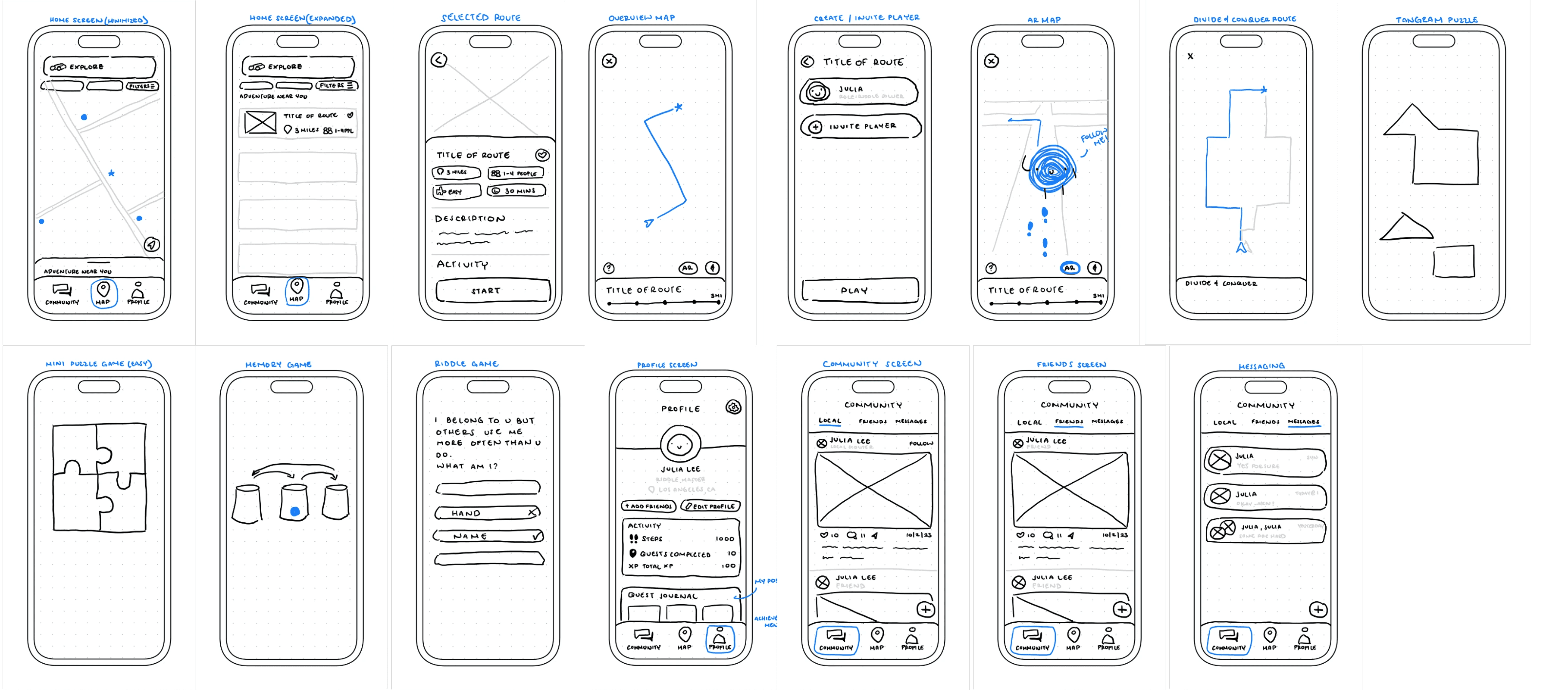
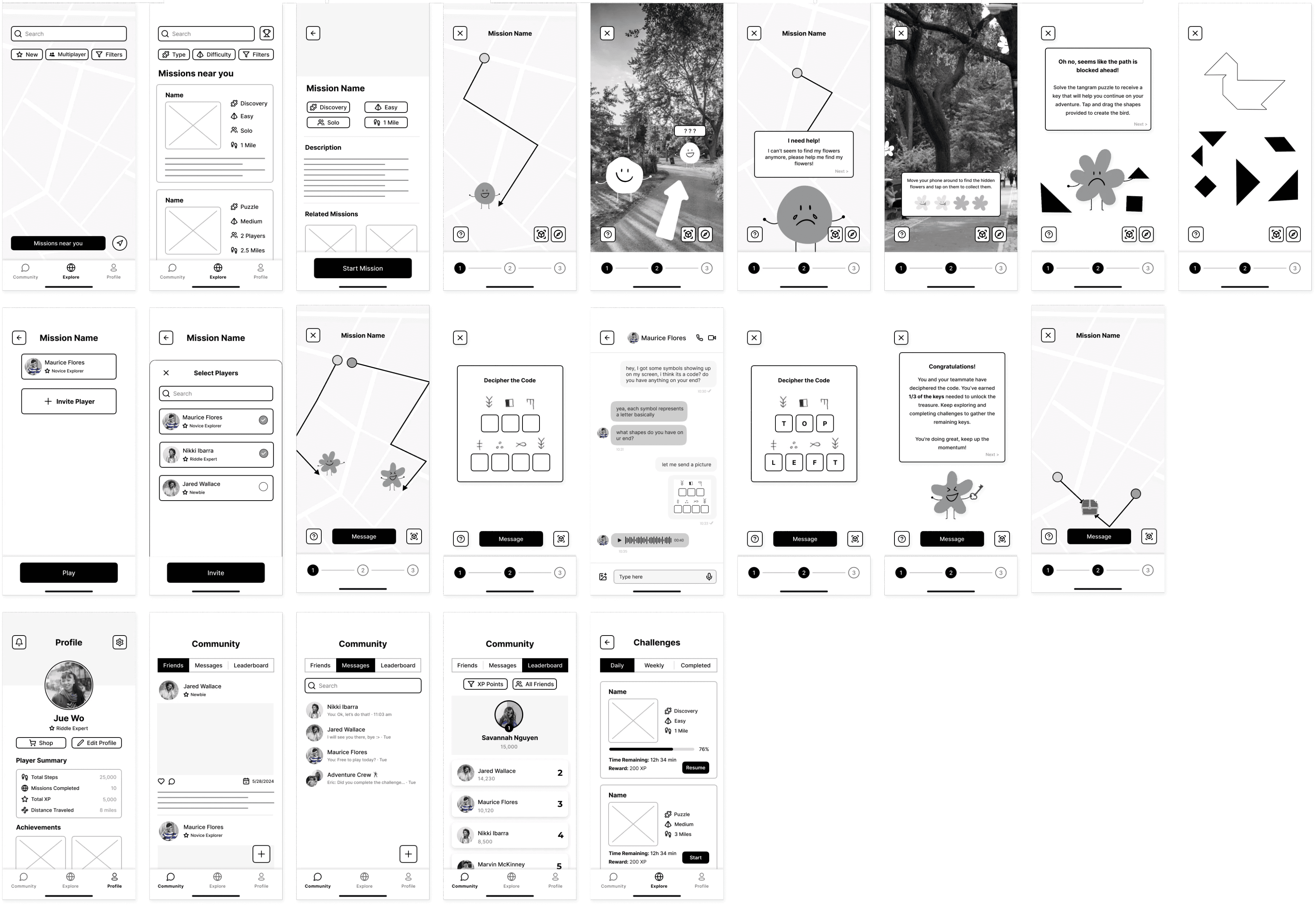
Sketches and Wireframes
I focused on three flows: Explore (finding a challenge quickly), Quest Page (understanding what you’re about to do), and Gameplay (blending physical movement with digital interaction in an intuitive, fun way). I explored different ideas on how to flip between the physical and digital worlds (AR functions).
Design System
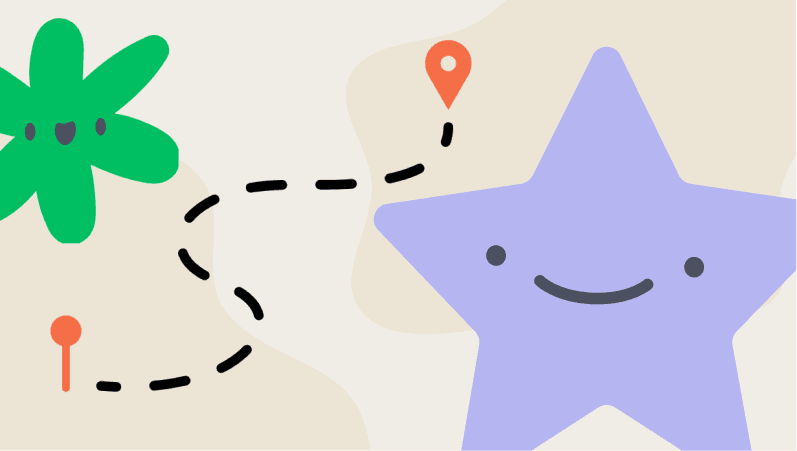
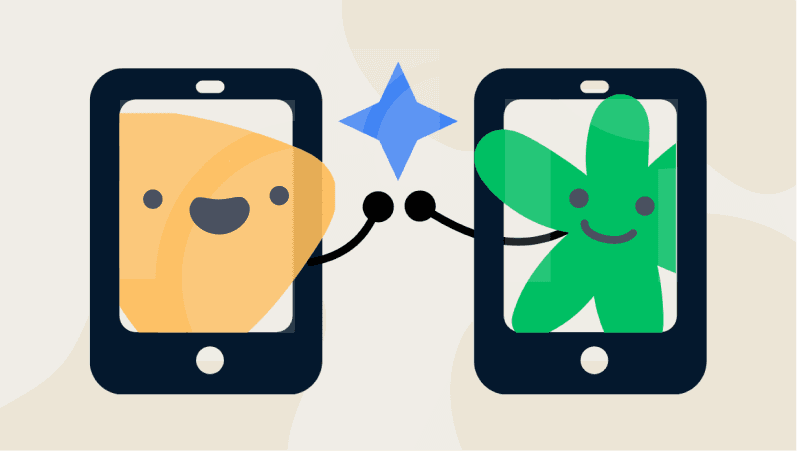
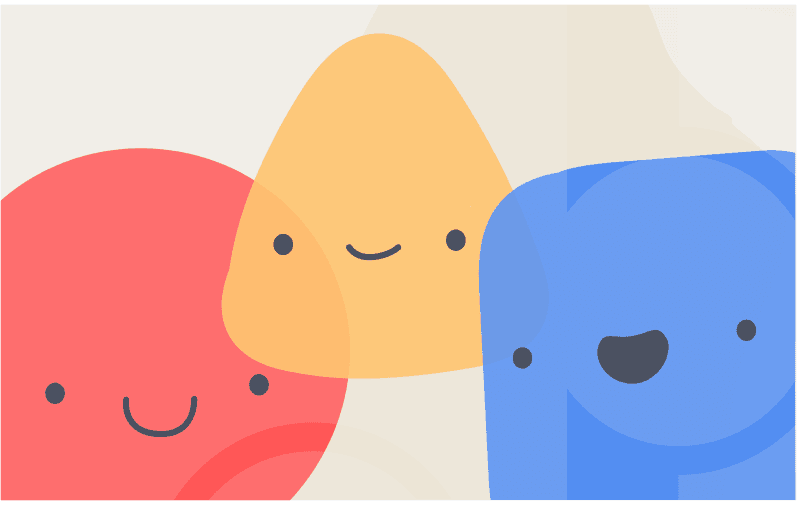
I wanted Wander to feel friendly and inviting, something that felt appropriate for families and fun enough for younger users. So I incorporated customizable font sizes and colors catering to diverse visual abilities. The app's visual elements feature minimalistic and friendly designs, using simple shapes and colors, creating a universally accessible and user-friendly experience.
Heading 1
Heading 2
Heading 3
Body
Supporting Text
Baloo 2 Regular 14px
Baloo 2 Regular 16px
Baloo 2 Semibold 18px
Baloo 2 Semibold 20px
Baloo 2 Bold 24px
Typography
Colors
Illustrations
Logo

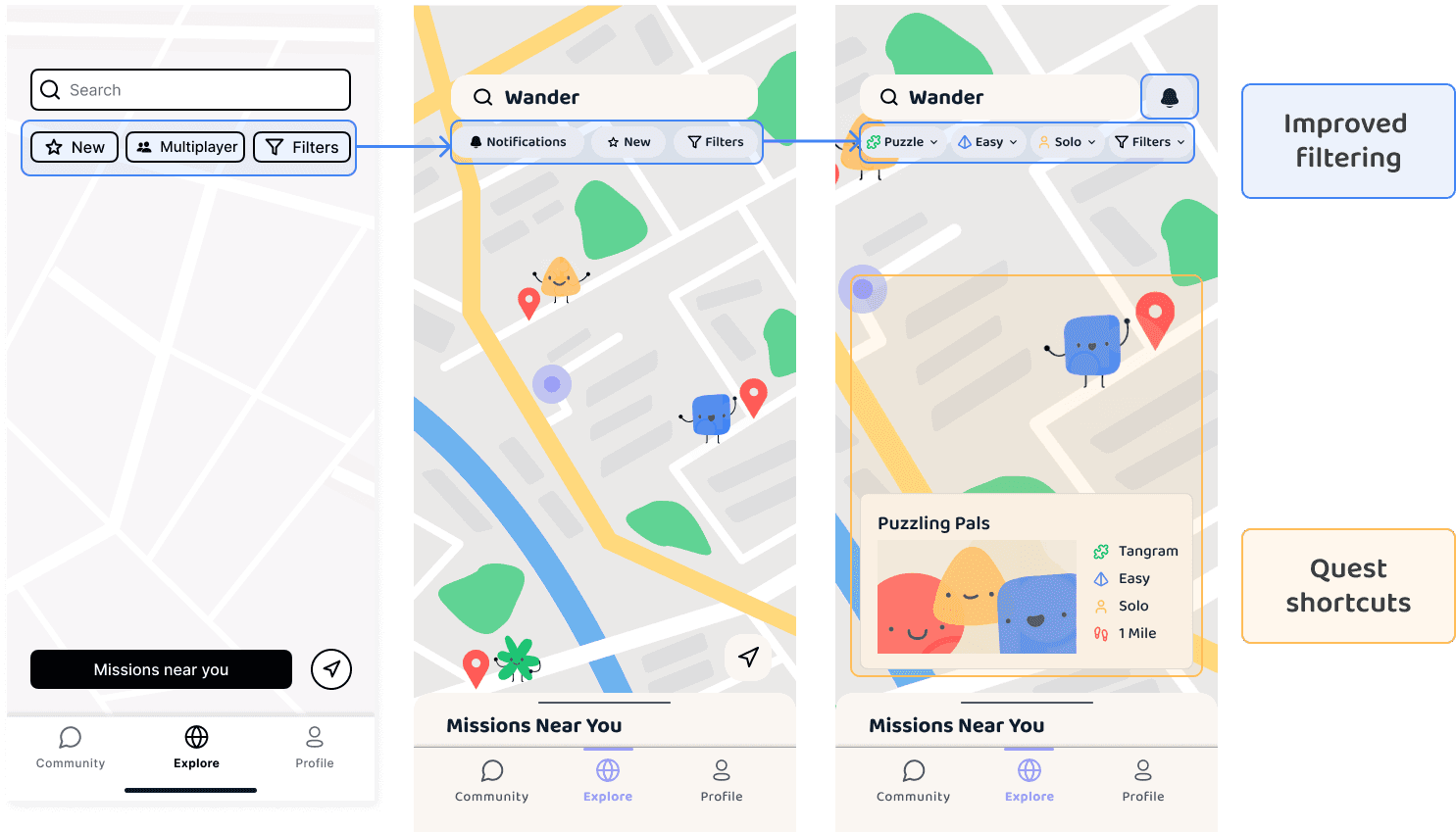
After numerous revisions, I implemented 3 improvements, guided by feedback collected from 3 users.
user testing
Refined Navigation
Filters weren’t intuitive, and people struggled to quickly find a challenge. I redesigned a more meaningful filter bar and added quest shortcuts directly on the map, helping users start a mission quicker.
Lofi
Hifi V1
Hifi V2
Lofi
Hifi V1 & V2
AR Integration
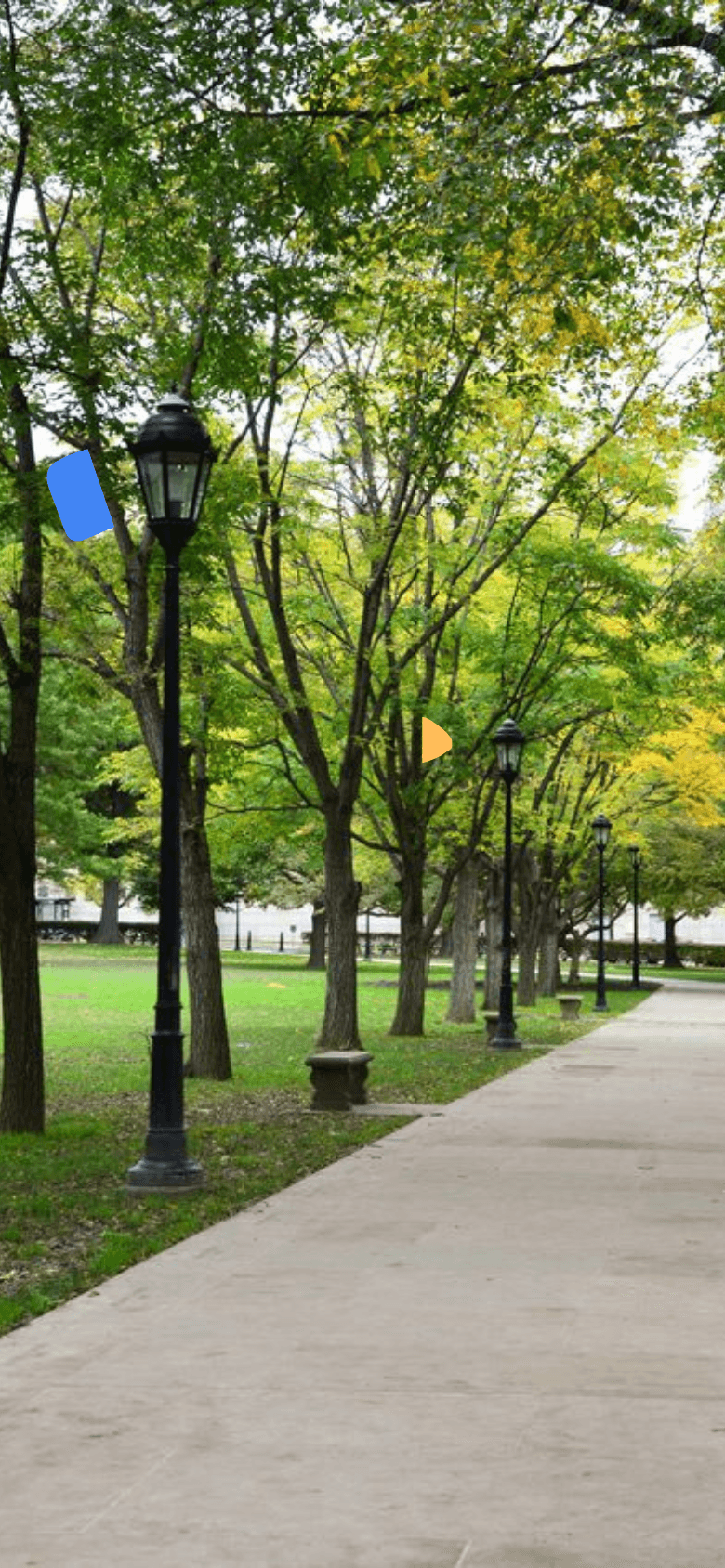
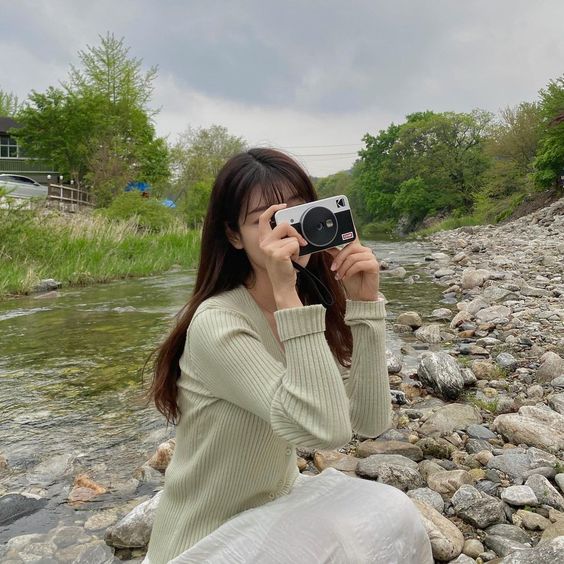
In early concepts, the AR was on, but the environment wasn’t really doing any work as users didn’t need to move or engage with their surroundings to complete activities. I redesigned gameplay to make the environment essential to progress and turn AR into a natural extension of the walking experience.
1

2
3


Improved
gameplay
???
I belong to you but others use me more often than you do.
What am I?
1
2
3
AR



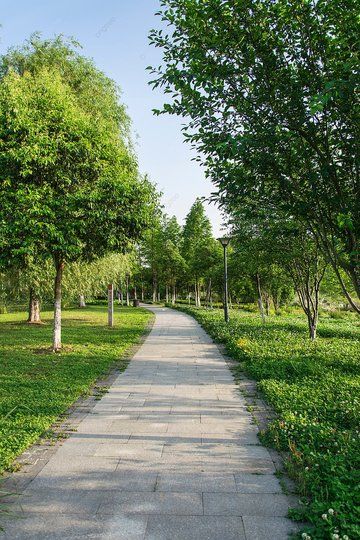
AR
Collect the tangram pieces around you and assemble them to form the bird.


Hifi V2
Accessibility
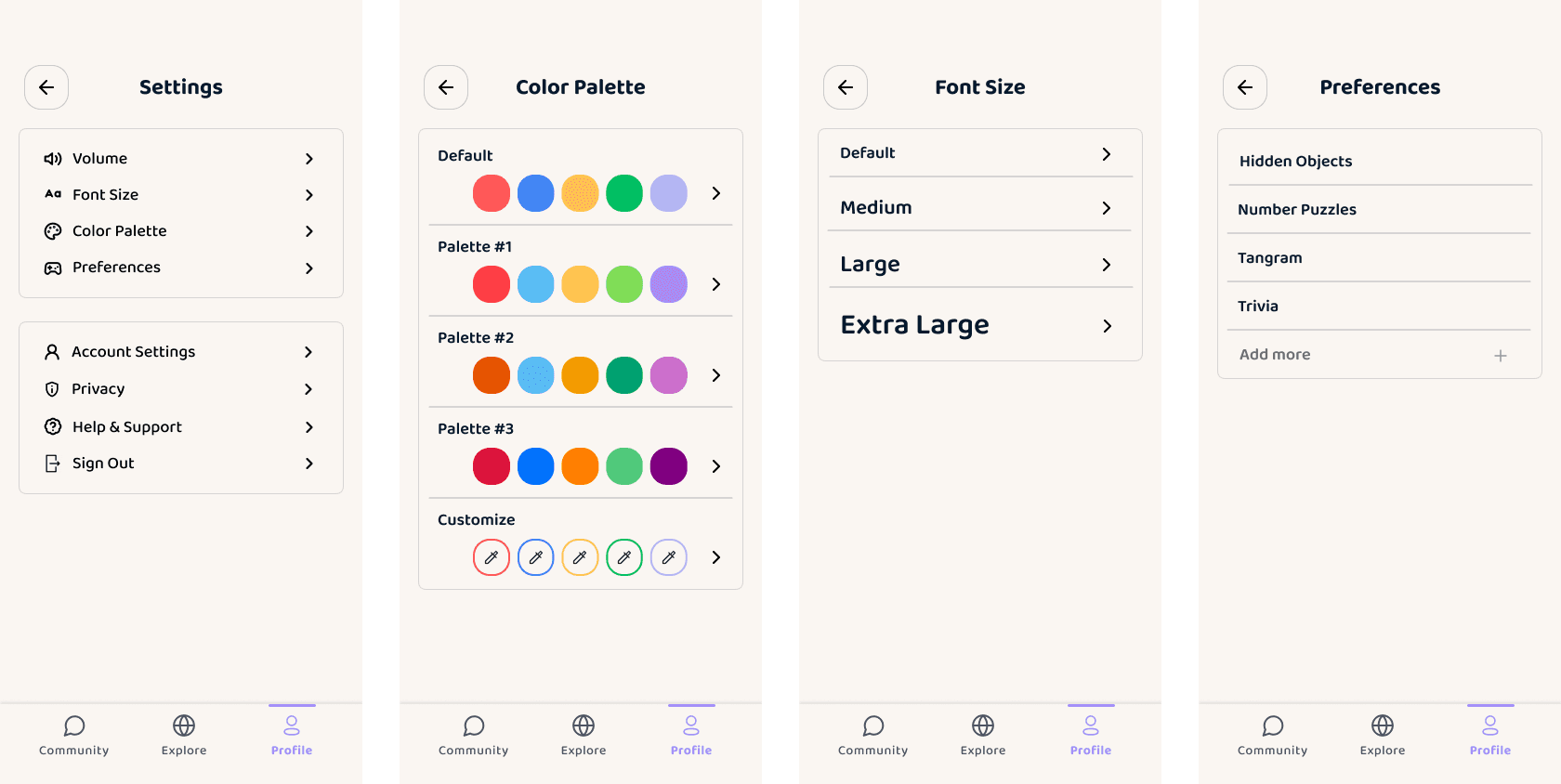
One thing that became obvious during testing is that outdoor environments have specific accessibility needs such as movement, quick glances, color sensitivity, and more. To combat this, I added adjustable font sizes, customizable color palettes, and interaction level modifications. This made the experience more inclusive across ages, energy levels, and needs.
the solution
Wander, the solution to enhancing social and physical health through gaming.
Gamification
Turning walks into enjoyable adventures with personalized challenges and rewards.
Remote Play
Connecting players across states, enabling shared adventures and collaborative quests for seamless social interaction.
Social Integrations
Join shared adventures, build connections, and celebrate the joy of exploration together.
reflection
The art of balancing challenging gameplay with polished UX/UI.
Designing Wander taught me how to balance playful game mechanics with real accessibility needs. Designing different mission types and integrating AR challenges made me understand the importance of balancing creativity with practicality, making sure each feature enhances rather than complicates the user experience. Small details like adjustable fonts, color palettes, and clearer flows taught me how to make the experience more inclusive and enjoyable outdoors.
Create customizable virtual avatars to add a touch of fun and individuality to your experience
Personalized Avatars
Unlock tangible rewards that extend beyond the virtual realm when you complete challenges
Real-Life Rewards
Sync with popular fitness trackers and smartwatches and track your physical activity and gameplay
Tech Wearables
If I had more time...
thanks for reading!
resume